__________
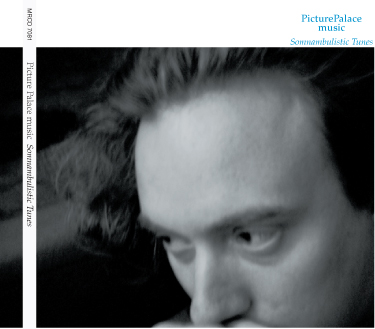
"Somnambulistic Tunes"
music inspired by
Robert Wiene´s
"Das Cabinet des Dr. Caligari"
All tracks composed, written and arranged by
Thorsten Quaeschning
Engineering & Mastering:
Bjorn Sollruud
All tracks performed by
Picture Palace music
Recorded in Summer 2004 at
Eastgate-Studios (Vienna), Q-Music-Studios (Berlin)& Townend-Studios (Berlin)
Thorsten Quaeschning:
Synthesizer, Programming, Guitar, Vocoder, Piano, E-Bow
Susanna Maria Sellin:
Saxophon
(Track 10 & 14)
Thorsten Spiller:
Guitar
(Track 2 & 14)
Artwork:
Evi Kruckenhauser & Thorsten Quaeschning
Photos
Jennifer Weichert & Thorsten Quaeschning
Mixing:
Thorsten Quaeschning
Produced:
Thorsten Quaeschning
Special Thanks:
Marian K, Sandra S, AnT, Sascha B, Thomas B, Vincent N,
Edgar F, Timothy M, Don, Stoppel, Martin K, Christian H, Pablo, Andy,
Peter G, Jennie W, Tim P, Tony B, Lisa K, Edvard, Kai H, Sepp S, Olaf Z & Jack D
Thanks to:
Manikin Electronic, Access, Steinberg, Roland
__________
01 Overture
02 Little town of Holstenwall
03 Annual fair
04 Somnambulistic
05 Streets of Holstenwall
06 Night, Night, Night
07 Help, murder, help
08 Funfair 1919
09 Jane and Cesare
10 The funeral night
11 Jane´s nightmare
12 On the run
13 Celebrating fears Part II
14 Invastigation
15 Twilight of the invalid
16 Lunatic Asylum
18 Final
26th June 2007
Released by Manikin Records
"Somnambulistic Tunes"
music inspired by
Robert Wiene´s
"Das Cabinet des Dr. Caligari"
All tracks composed, written and arranged by
Thorsten Quaeschning
Engineering & Mastering:
Bjorn Sollruud
All tracks performed by
Picture Palace music
Recorded in Summer 2004 at
Eastgate-Studios (Vienna), Q-Music-Studios (Berlin)& Townend-Studios (Berlin)
Thorsten Quaeschning:
Synthesizer, Programming, Guitar, Vocoder, Piano, E-Bow
Susanna Maria Sellin:
Saxophon
(Track 10 & 14)
Thorsten Spiller:
Guitar
(Track 2 & 14)
Artwork:
Evi Kruckenhauser & Thorsten Quaeschning
Photos
Jennifer Weichert & Thorsten Quaeschning
Mixing:
Thorsten Quaeschning
Produced:
Thorsten Quaeschning
Special Thanks:
Marian K, Sandra S, AnT, Sascha B, Thomas B, Vincent N,
Edgar F, Timothy M, Don, Stoppel, Martin K, Christian H, Pablo, Andy,
Peter G, Jennie W, Tim P, Tony B, Lisa K, Edvard, Kai H, Sepp S, Olaf Z & Jack D
Thanks to:
Manikin Electronic, Access, Steinberg, Roland
__________
01 Overture
02 Little town of Holstenwall
03 Annual fair
04 Somnambulistic
05 Streets of Holstenwall
06 Night, Night, Night
07 Help, murder, help
08 Funfair 1919
09 Jane and Cesare
10 The funeral night
11 Jane´s nightmare
12 On the run
13 Celebrating fears Part II
14 Invastigation
15 Twilight of the invalid
16 Lunatic Asylum
18 Final
26th June 2007
Released by Manikin Records
- - - - - - - - - - - - - - - - - - - - - - -
Review : CDS Dundee/Scotland (Aug 2007)
"PICTURE PALACE MUSIC: SOMNAMBULISTIC TUNES
(Tangerine Dream's Thorsten "Q" Quaeschning with his new project - Stock 455633)
Those of you familiar with those UK Marks & Spencer "Simply Food" adverts for their quality food products will get it when I say... "This is not just any synth music... This is TS synth music" (or should that be "musouk" :-)
Try to imagine that Vangelis was a member of Tangerine Dream throughout the 70's and 80's and they made an album together, then you are coming closer to getting a feel for how this album sounds.
'Somambulistic Tunes' is the brainchild of Edgar Froese's mate with the unpronounceable name: Thorsten ''Q'' Quaeschning, and it's an album that should be required classroom listening by the whole of the Berlin and Euro-synth schools - because it shows you the sheer emotional perfection of brevity. Across 17 tracks, Quaeschning puts more feeling into two minutes of his music than practically anyone else around the synth music scene right now. With tracks from two to thirteen minutes long, he's produced a master-class of an album. You'll hear everything from short cosmic symphonies with choral voices that are almost up to Constance Demby standards (almost!!) to more rhythmic pieces where things develop slowly, but where every note counts, where rhythms are accompanied by space and texture, and where expanse and emotion are just simply heavenly. But there's an edge to it all as well, so that none of it comes across as overly syrupy. Even where guitars are used, it's done to make each note count - and throughout the album, this feeling of warmth is conveyed to completion. Overall, it's a totally spellbinding album of slowly unfolding, varied yet emotionally thematically linked, glorious sounding, uplifting and highly enjoyable synths-based music that is a total treat on the ears."
"PICTURE PALACE MUSIC: SOMNAMBULISTIC TUNES
(Tangerine Dream's Thorsten "Q" Quaeschning with his new project - Stock 455633)
Those of you familiar with those UK Marks & Spencer "Simply Food" adverts for their quality food products will get it when I say... "This is not just any synth music... This is TS synth music" (or should that be "musouk" :-)
Try to imagine that Vangelis was a member of Tangerine Dream throughout the 70's and 80's and they made an album together, then you are coming closer to getting a feel for how this album sounds.
'Somambulistic Tunes' is the brainchild of Edgar Froese's mate with the unpronounceable name: Thorsten ''Q'' Quaeschning, and it's an album that should be required classroom listening by the whole of the Berlin and Euro-synth schools - because it shows you the sheer emotional perfection of brevity. Across 17 tracks, Quaeschning puts more feeling into two minutes of his music than practically anyone else around the synth music scene right now. With tracks from two to thirteen minutes long, he's produced a master-class of an album. You'll hear everything from short cosmic symphonies with choral voices that are almost up to Constance Demby standards (almost!!) to more rhythmic pieces where things develop slowly, but where every note counts, where rhythms are accompanied by space and texture, and where expanse and emotion are just simply heavenly. But there's an edge to it all as well, so that none of it comes across as overly syrupy. Even where guitars are used, it's done to make each note count - and throughout the album, this feeling of warmth is conveyed to completion. Overall, it's a totally spellbinding album of slowly unfolding, varied yet emotionally thematically linked, glorious sounding, uplifting and highly enjoyable synths-based music that is a total treat on the ears."
- - - - - - - - - - - - - - - - - - - - - - -
Review : Guts Of Darkness: The French Website of Dark, Ambient & Experimental Music / France
.
Picture Palace Music is the new musical project of Thorsten Quaeschning, the new companion of Edgar Froese in Tangerine Dream. The basic idea of this scheme is to pay a sound homage to silent films, completely silent ones, defying sound perceptions of the time with the interpretations of today. An ambitious and interesting project which starts in a beautiful way with Somnambulistic Tunes, witch is inspired by Das Cabinet of Dr. Caligari, of Robert Wiene. This pioneer film of the German expressionism cinema was release in 1919 and tells the story of a mysterious travelling acrobat who makes commit crimes by a sleepwalker. The spirit of this picture is describe as dark and very nightmarish. On this level, the work of Picture Palace Music does not reach such a paroxysm. On the other hand Thorsten Quaeschning astonishes by delivering a very atmospheric opus where the drama is finely present on superb orchestral arrangements.
Overture bursts on an alive and vibrating tonality. A more dramatic structure settles with percussions with symphonic thunders and a harmonious elegy which progresses on a dense philharmonic structure to loud and slipping cello, violin layers, which concludes on disparate percussions. Little town of Holstenwall follows on a rather similar rhythm structure where a bass and hopping sequence oscillates on an atmospheric guitar which floats in a light and incongruent universe. Already we seize the control of Quaeschning. It swivels from a structure to another, remainder in conformity with its visions. Annual fair has a more rock steady tempo which harmonize on Victorian and Angelus singing. A rather heavy movement, stuff of superb throbbing choruses. Contrasts link brilliantly, while infiltrating a rich orchestral mood on the superb title track and Streets of Holstenwall. Gradually Thorsten Quaeschning imposes his vision, which takes shape with address in styles diversity and an overflowing scriptural imagination. Night, Night, Night and Help, murder, help are 2 superb parts which dive in dark spheres, but tinted of a neurotic luminosity, as the choirs that revolve there. By far, this is the very strong moments of Somnambulistic Tunes
After this section, we go through a more balance universe with much more atmosphere. Less rhythmic Somnambulistic Tunes ravels its introspection on slow and heavy moves of Funfair 1919, with its percussions that plough a penetrating atmosphere. Environment is darker with strange linear pulsations which intermingle to short heterogeneous harmonies where a beautiful sax illuminates the moon on The funural night. Slow ambiances are waked up by an approach of lugubrious and alive percussions of On the Run, when as eases of burials of Celebrating fears Part II, are of a striking surrealism and take us again in the dark atmospheric mood of Somnambulistic Tunes. Comes then Invastigation and its very beautiful charming piano, which monopolizes all the attention. The tone is light, almost atonic, but of an undeniable mythical beauty. In my opinion, it is the only title which allows an association Thorsten Quaeschning and Tangerine Dream. The album encloses on 2 other beautiful tracks with dense and harmonious symphonic incantations, taking again melodious bits which we find around the opus, as the very beautiful Night, night, night.
I was very astonished by the quality of Somnambulistic Tunes. It is a work conceived with tact worthy of renown artists. It is obvious that Thorsten Quaeschning is very talented and has a very visual direction of writing. Eyes close, we palpate the insane and neurosis glances of these actors of the silent ages which had from their faces what the voice did not give. Here, Picture Palace Music gives to faces the missing colors and to the film a sound dimension with the heavy, dark orchestrations and of a romantic neurotic. A great surprise.
Sylvain Lupari
.
Picture Palace Music is the new musical project of Thorsten Quaeschning, the new companion of Edgar Froese in Tangerine Dream. The basic idea of this scheme is to pay a sound homage to silent films, completely silent ones, defying sound perceptions of the time with the interpretations of today. An ambitious and interesting project which starts in a beautiful way with Somnambulistic Tunes, witch is inspired by Das Cabinet of Dr. Caligari, of Robert Wiene. This pioneer film of the German expressionism cinema was release in 1919 and tells the story of a mysterious travelling acrobat who makes commit crimes by a sleepwalker. The spirit of this picture is describe as dark and very nightmarish. On this level, the work of Picture Palace Music does not reach such a paroxysm. On the other hand Thorsten Quaeschning astonishes by delivering a very atmospheric opus where the drama is finely present on superb orchestral arrangements.
Overture bursts on an alive and vibrating tonality. A more dramatic structure settles with percussions with symphonic thunders and a harmonious elegy which progresses on a dense philharmonic structure to loud and slipping cello, violin layers, which concludes on disparate percussions. Little town of Holstenwall follows on a rather similar rhythm structure where a bass and hopping sequence oscillates on an atmospheric guitar which floats in a light and incongruent universe. Already we seize the control of Quaeschning. It swivels from a structure to another, remainder in conformity with its visions. Annual fair has a more rock steady tempo which harmonize on Victorian and Angelus singing. A rather heavy movement, stuff of superb throbbing choruses. Contrasts link brilliantly, while infiltrating a rich orchestral mood on the superb title track and Streets of Holstenwall. Gradually Thorsten Quaeschning imposes his vision, which takes shape with address in styles diversity and an overflowing scriptural imagination. Night, Night, Night and Help, murder, help are 2 superb parts which dive in dark spheres, but tinted of a neurotic luminosity, as the choirs that revolve there. By far, this is the very strong moments of Somnambulistic Tunes
After this section, we go through a more balance universe with much more atmosphere. Less rhythmic Somnambulistic Tunes ravels its introspection on slow and heavy moves of Funfair 1919, with its percussions that plough a penetrating atmosphere. Environment is darker with strange linear pulsations which intermingle to short heterogeneous harmonies where a beautiful sax illuminates the moon on The funural night. Slow ambiances are waked up by an approach of lugubrious and alive percussions of On the Run, when as eases of burials of Celebrating fears Part II, are of a striking surrealism and take us again in the dark atmospheric mood of Somnambulistic Tunes. Comes then Invastigation and its very beautiful charming piano, which monopolizes all the attention. The tone is light, almost atonic, but of an undeniable mythical beauty. In my opinion, it is the only title which allows an association Thorsten Quaeschning and Tangerine Dream. The album encloses on 2 other beautiful tracks with dense and harmonious symphonic incantations, taking again melodious bits which we find around the opus, as the very beautiful Night, night, night.
I was very astonished by the quality of Somnambulistic Tunes. It is a work conceived with tact worthy of renown artists. It is obvious that Thorsten Quaeschning is very talented and has a very visual direction of writing. Eyes close, we palpate the insane and neurosis glances of these actors of the silent ages which had from their faces what the voice did not give. Here, Picture Palace Music gives to faces the missing colors and to the film a sound dimension with the heavy, dark orchestrations and of a romantic neurotic. A great surprise.
Sylvain Lupari
- - - - - - - - - - - - - - - - - - - - - - -
Review : Synthmusic-Direct / UK
Thorsten Quaeshning has played on many a Tangerine Dream album as well as being part of the band's live performances. Some of this album was even recorded at Edgar's Eastgate Studio. The CD was inspired by Robert Wiene's 'Das Cabinet des Dr Caliga'. I believe that the music here could be thought of as a soundtrack to the film. 'Overture' does have something of a TD feel, dramatic stabs setting the scene whilst a little melody shimmers over the top. Drum flourishes build a feeling of tension. Sawing strings materialise giving proceedings an appropriately cinematic feel. A good opener. A sequence emerges as we transcend to the second part. Moody electric guitar and harpsichord type lead line join it. This is all rather stripped down stuff where subtlety creates the atmos. A more energetic forceful rhythm starts up as we enter the next stage. A real groove is developed helped by a really nice bass line with faint melodies weaving between the beats. Angelic vocal colouring can be heard from time to time which continue through to the title track. The vocals overlay each other creating a quite beautiful serene atmosphere. Near the end a sequence bubbles to the surface but then quickly decays again. As we move to the next section a more prominent sequence emerges accompanied by lovely guitar licks.
Things become more symphonic again as we move through to the next part. It's all quite nice I suppose, though rather soporific but as the title is 'Night, Night, Night' that is to be expected. More rhythms kick things back to life, propelling us through the next scene, TD stylings showing once more. For the eighth part, slow drums create a very effective moody atmos, the sparseness of the backing making things even more effective. The following part features nice brooding symphonics which create a lovely melancholy feel. As you would expect 'The Funeral Night' is all rather tranquil with a slow melancholy sax lead. A sedate sequence emerges in support of the melody. Things wind down through a short bridging section before crashing drums energise proceedings for 'On the Run'. Strange growling animal noises can be heard as the intensity of the rhythm grows. We transcend to eerie nightmarish electronic effects for the next section and very effective they are too. Next up is (at thirteen minutes) by far the longest track. A repeated piano melody shimmers from the speakers accompanied by dreamy lead line with just a hint of melancholy. Once again this has quite a TD feel. Fresh leads come and go but the mood remains the same. The pace quickens slightly as things become more syncopated.
Piano returns as we go with the ebb and flow. Little percussive guitar licks hit the spot perfectly. We pass through a short symphonic bridging section then vast drums pulse out like the hammering of some Hellish mallet. More strings swell underneath as malevolent hissing noises rise from the depths. The album comes to a mellow close with more strings. Even though this album does show Tangerine Dream influences on quite a few tracks, Thorsten also takes things off in different directions letting the film that influenced the work lead him where it will, giving the project an identity of its own. (DL)
- - - - - - - - - - - - - - - - - - - - - - -
Review : Musikzirkus-Magazin / Germany
Bei Manikin Records erschien im Juni 2007 die erste CD eines Projektes mit dem Namen PicturePalace music. Hinter diesem Namen steht der Keyboarder Thorsten Quaeschning, der seit 2003 als Techniker und ab 2005 als Musiker bei der Elektroniklegende Tangerine Dream Mitglied ist.
Der Projektname lässt schon erahnen, dass es hier um Musik aus dem Filmbereich geht. Thorsten hat sich bei seinem Werk von einem Klassiker der Filmgeschichte inspirieren lassen und zwar von dem expressionistischen Stummfilm „Das Cabinet des Dr. Caligari". Der deutsche Horrorfilm von Robert Wiene aus dem Jahr 1920 gilt auch heute noch als ein Meilenstein der Filmgeschichte, kein leichtes Thema, das sich Thorsten da ausgesucht hat.
Die Aufnahmen zu „Somnambulistic Tunes" sind bereits im Jahr 2004 entstanden, erscheinen aber erst jetzt bei Manikin. Thorsten hat auch schon weitere Stücke komponiert, deren Inspiration bei Werken wie Friedrich Wilhelm Murnau's „Nosferatu" oder Fritz Lang's „Metropolis" liegen.
„Somnambulistic Tunes" hat Thorsten nicht komplett allein eingespielt, als Gastmusiker agieren bei drei der Stücke Susanna Maria Sellin am Saxophon und Thorsten Spiller an der Gitarre. Ganze 17 Tracks mit Laufzeiten zwischen 0:45 und 13:35 Minuten umfasst die 75minütige CD. Die ganze CD, obwohl aus 17 Stücken bestehend, ist ein Gesamtwerk, da die einzelnen Stücke ineinander übergehen. Aus diesem Grund kann man die Stücke eigentlich nicht einzeln betrachten, sondern muss die CD als Ganzes sehen.
Das Thorsten sich im Tangerine Dream-Umfeld tummelt, ist seiner Veröffentlichung zwar deutlich anzumerken, aber auch Tracks, die so gar nichts mit TD zu tun haben, finden sich auf dem wirklich guten Album. Die „Overtuere", mit der die CD startet, beginnt mit Sounds, die stark an TD erinnern, aber durch den Einsatz von Trommeln und Geigensounds bekommt dieser Opener einen ganz anderen, orchestralen Touch, der dann erheblich von typischen TD-Sound abweicht.
Bei „Little Town Of Holstenwall" kommt ein sehr schöner Effekt zum Tragen, den Thorsten Spiller mit seiner E-Gitarre erzeugt. Das klingt absolut neu. TD-typische Sounds wechseln sich mit Electro-Beats wie in „Annual Fair", atmosphärischen Stimmungen, die teils wie im Stück „Somnambulistic" mit Opernhaften Stimmsamples gespickt sind, bedrohlich wirkende experimentelle Parts wie in „Celebrating Fears Part II" oder jazzigen Passagen wie bei „Funfair 1919" ab.
„Streets Of Holstenwall" klingt beispielsweise durch seine ungewöhnlichen Sounds und der langsam dahintrabenden Rhythmussequenz wie eine Fahrt durch eine Neonlichtstrahlende Großstadt bei Nacht. Und „On The Run" besticht durch eine tolle Drumprogrammierung, die einen disharmonischen Rhythmus erzeugt. Das gefällt mir sehr gut.
Thorsten Quaeschning hat mit „Somnambulistic Tunes" ein klasse Album herausgebracht und damit eine hervorragende Umsetzung des Filmklassikers geschaffen. Die Musik befindet sich zwar in der Nähe von Tangerine Dream, enthält aber genug eigene Elemente. Wer z. B. die CD „Summer In Nagasaki" von Tangerine Dream mag, der wird dieses Album ebenfalls mögen. Mir gefällt „Somnambulistic Tunes" sehr gut. Ich bin gespannt und hoffe auf weitere Veröffentlichungen seines Projektes.
Stephan Schelle, August 2007
- - - - - - - - - - - - - - - - - - - - - - -
Review : IO-Pages / Netherlands
Picture Palace music is een project van de Duitse multi-instrumentalist Thorsten Quaeschning. Sinds een aantal jaren maakt hij deel uit van Tangerine Dream. Het gaat me te ver om te zeggen dat hij TD heeft gered maar vanaf zijn komst klinkt hun muziek in ieder geval wel een stuk frisser. Dit en het feit dat hij aan heeft gegeven, fan te zijn van prog, maakte mij geïnteresseerd in Somnambulistic Tunes. De muziek is geïnspireerd door Robert Wiene's Das Cabinet Des Dr. Caligari. De CD kent zeventien stukken die allen in elkaar overlopen. Op een aantal composities wordt Quaeschning bijgestaan door Susanna Maria Sellin (sax) en Thorsten Spiller (gitaar). Het is een mooie en consistente plaat geworden waarin diverse stijlen uit de elektronische muziek samen komen. Hij opent orkestraal en met een prachtig digitaal geluid in Overture. De link naar Tangerine Dream is goed te horen in Little Town Of Holstenwall waarin een rustige sequence te horen is. Op sommige tracks worden (gelukkig niet al te drukke) moderne drumklanken ingezet. Mooi is Somnabulistic. Hier maakt Quaeschning gebruik van operateske stemsamples. Andere nummers zoals Night, Night, Night, Jane And Cesare en Lunatic Asylum hadden niet misstaan als filmmuziek. Soms experimenteert hij. Dit is bijvoorbeeld het geval in Celebrating Fears Part II. Invastigation vind ik het beste nummer van de CD door de mooie pianoklanken, de kalme sequence en de zachte drums. Dit is nog het meest TD-achtig. Ik zou deze CD niet als meesterwerk willen benoemen, daarvoor kent het ook een aantal mindere momenten, maar het is wel een van de beste elektronische muziekplaten die ik in 2007 heb gehoord.
Paul Rijkens, IO-Pages
Picture Palace music is een project van de Duitse multi-instrumentalist Thorsten Quaeschning. Sinds een aantal jaren maakt hij deel uit van Tangerine Dream. Het gaat me te ver om te zeggen dat hij TD heeft gered maar vanaf zijn komst klinkt hun muziek in ieder geval wel een stuk frisser. Dit en het feit dat hij aan heeft gegeven, fan te zijn van prog, maakte mij geïnteresseerd in Somnambulistic Tunes. De muziek is geïnspireerd door Robert Wiene's Das Cabinet Des Dr. Caligari. De CD kent zeventien stukken die allen in elkaar overlopen. Op een aantal composities wordt Quaeschning bijgestaan door Susanna Maria Sellin (sax) en Thorsten Spiller (gitaar). Het is een mooie en consistente plaat geworden waarin diverse stijlen uit de elektronische muziek samen komen. Hij opent orkestraal en met een prachtig digitaal geluid in Overture. De link naar Tangerine Dream is goed te horen in Little Town Of Holstenwall waarin een rustige sequence te horen is. Op sommige tracks worden (gelukkig niet al te drukke) moderne drumklanken ingezet. Mooi is Somnabulistic. Hier maakt Quaeschning gebruik van operateske stemsamples. Andere nummers zoals Night, Night, Night, Jane And Cesare en Lunatic Asylum hadden niet misstaan als filmmuziek. Soms experimenteert hij. Dit is bijvoorbeeld het geval in Celebrating Fears Part II. Invastigation vind ik het beste nummer van de CD door de mooie pianoklanken, de kalme sequence en de zachte drums. Dit is nog het meest TD-achtig. Ik zou deze CD niet als meesterwerk willen benoemen, daarvoor kent het ook een aantal mindere momenten, maar het is wel een van de beste elektronische muziekplaten die ik in 2007 heb gehoord.
Paul Rijkens, IO-Pages
- - - - - - - - - - - - - - - - - - - - - - -
eclipsed
Art Progressive Psychedelic Classic Hard Rock März 08
elektronische Stummfilmmusik
6 von 10
Artverwandt: Tangerine Dream, Chris Franke, Hans Zimmer
Hinter Picture Palace music verbirgt sich Thorsten Quaeschning, der seit Jerome Froeses Ausstieg bei Tangerine Dream den zweiten Platz hinter deren Keyboard-Burgen einnimmt. Das hör man auch heraus, denn die Nähe zum TD-Kosmos ist permanent spürbar.
Dennoch bekommt man mit diesem Projekt andere Sounds und Vibrations geliefert.
"Somnambulistic Tunes" ist nämlich als Stummfilmmusik in modernen Zeiten gedacht. Hatte man früher bei Silent Movies-Aufführungen live häufig ein Piano gehört, so fällt dieser imaginäre Soundtrack, inspiriert vom expressionistischen Stummfilmklassiker "Das Kabinett des Dr. Caligari" fast rein elektronisch aus,
Die Eröffnung kommt dramatisch-symphonisch. Danach ertönen sakrale synthetische Chöre. "Night Night "night" klingt weniger kunstbemüht, mehr wie ein Hollywood-Soundtrack-Thema und "Help Murder Help" ist dann diese typische TD-Sequenzerkost. In zwei titeln berauscht zudem ein Saxophon die Sinne.
Gut tut´s, wenn mal ein Piano im Vordergrund steht, statt dass Synthies alles verkleistern ("Invaestigation").Ob diese Musik dem alten Stummfilm-Meisterwerk aber tatsächlich gut zu Gesichte steht, bleibt fraglich.
WS
Art Progressive Psychedelic Classic Hard Rock März 08
elektronische Stummfilmmusik
6 von 10
Artverwandt: Tangerine Dream, Chris Franke, Hans Zimmer
Hinter Picture Palace music verbirgt sich Thorsten Quaeschning, der seit Jerome Froeses Ausstieg bei Tangerine Dream den zweiten Platz hinter deren Keyboard-Burgen einnimmt. Das hör man auch heraus, denn die Nähe zum TD-Kosmos ist permanent spürbar.
Dennoch bekommt man mit diesem Projekt andere Sounds und Vibrations geliefert.
"Somnambulistic Tunes" ist nämlich als Stummfilmmusik in modernen Zeiten gedacht. Hatte man früher bei Silent Movies-Aufführungen live häufig ein Piano gehört, so fällt dieser imaginäre Soundtrack, inspiriert vom expressionistischen Stummfilmklassiker "Das Kabinett des Dr. Caligari" fast rein elektronisch aus,
Die Eröffnung kommt dramatisch-symphonisch. Danach ertönen sakrale synthetische Chöre. "Night Night "night" klingt weniger kunstbemüht, mehr wie ein Hollywood-Soundtrack-Thema und "Help Murder Help" ist dann diese typische TD-Sequenzerkost. In zwei titeln berauscht zudem ein Saxophon die Sinne.
Gut tut´s, wenn mal ein Piano im Vordergrund steht, statt dass Synthies alles verkleistern ("Invaestigation").Ob diese Musik dem alten Stummfilm-Meisterwerk aber tatsächlich gut zu Gesichte steht, bleibt fraglich.
WS
- - - - - - - - - - - - - - - - - - - - - - -
# Somnambulistic Tunes
# 16/20
# Date de Sortie : 2007
# Type : Album
# Artiste(s) : Picture Palace Music
#
Picture Palace Music, cest le nom du groupe de Thorsten Quaeschning basé essentiellement sur un concept original à savoir la mise en musique de films muets du début du 20 ème siècle. Il ne sagit donc pas de soundtracks classique puisque la musique dans ce cas prend une importance singulière. Du reste Thorsten est allé jusquau bout de sa démarche puisquil a réellement joué à Berlin à plusieurs occasions dans un cinéma sa musique durant la projection des films mythiques. Le groupe "Picture Palace Music" a été créé plusieurs années avant larrivée de Thorsten au sein de TD. Il en est le membre essentiel tant en composition quen interprétation mais a su sentourer de diverses personnes de qualité notamment Thorsten Spiller à la guitare.
Cest le film de 1919 « Das Cabinet des doktor Caligari » qui a inspiré lalbum en question. Il y est question dun docteur qui exhibe dans une fête foraine un somnambule qui fait de bien sinistres prédictions. De ce film sur la folie, Thorsten Quaechning a su apporter une illustration sonore moderne de qualité qui se laisse écouter avec grand plaisir .Est ce la trame du film ou les goûts éclectiques de Thorsten allant de Wagner à Sigur Ros en passant par le rock progressif qui font que lalbum nous présente des musiques extrêmement variées et prenantes ?
Parfois on pense à Bill Laswell (Annual Fair ,Funfair 1919) à Vangelis (Night,Night,Night) à Michael Nyman (Somnambulistic) et dans quelques brefs instants à TD pendant les séquences de Help murder Help rythmant des nappes aux sons volontairement impurs (un hit électronique potentiel). On ne peut-être que sensible à la mélancolie quinspire On the Run . Avec Invastigation, Thorsten développe des thèmes électroniques magnifiques autour de notes de piano répétées à linfini. Nous bénéficions là de treize minutes de bonheur auditif qui nous démontrent magistralement que derrière toute simplicité apparente se cache un potentiel musical infini. Il peut venir la tentation de comparer ce long titre avec Dalumination dEdgar.
Enfin,vous laurez compris Thorsten ne souffre pas de la comparaison de grands noms. Mais un jour viendra ou ce sera lui qui servira de référence.
- - - - - - - - - - - - - - - - - - - - - - -
Keyboads 04/08 / Germany
Picture Palace music
Somnambulistic Tunes
Manikin Records 2007
Die CD des Tangerine Dream Keyboarders Thorsten Quaeschning ist inspiriert von dem Film "Das Cabinet des Dr. Caligari", einem expressionistischen Stummfilm aus dem Jahr 1920. Und in der Tat macht die Musik den Eindruck, als ob sie diese spezielle visuelle Begleitung beim Hören auch erfordert. Der pathetisch-orchestrale Sound verbleibt, dem Thema entsprechend, kontinuierlich in einer düsteren Stimmung, jedoch wirkt die Musik im Ganzen eher etwas reseviert.
Den "Somnambulistic Tunes" liegt mit dem "Cabinet des Dr. Caligari" - einem für die damalige Zeit sehr innovativen Film - ein ambitioniertes Thema zugrunde. Diese Musik hinterfragt aber nicht die bekannten Schemata des Soundtrack-Geners, sondern, wie es auch der Name des Projektes "Picture Palace music" nahelegt, bedient man sich vielmehr daraus. Das Ergenis ist ein gelungenes Surrogat mehr oder weniger beklemmender Filmmusikthemen.
Picture Palace music
Somnambulistic Tunes
Manikin Records 2007
Die CD des Tangerine Dream Keyboarders Thorsten Quaeschning ist inspiriert von dem Film "Das Cabinet des Dr. Caligari", einem expressionistischen Stummfilm aus dem Jahr 1920. Und in der Tat macht die Musik den Eindruck, als ob sie diese spezielle visuelle Begleitung beim Hören auch erfordert. Der pathetisch-orchestrale Sound verbleibt, dem Thema entsprechend, kontinuierlich in einer düsteren Stimmung, jedoch wirkt die Musik im Ganzen eher etwas reseviert.
Den "Somnambulistic Tunes" liegt mit dem "Cabinet des Dr. Caligari" - einem für die damalige Zeit sehr innovativen Film - ein ambitioniertes Thema zugrunde. Diese Musik hinterfragt aber nicht die bekannten Schemata des Soundtrack-Geners, sondern, wie es auch der Name des Projektes "Picture Palace music" nahelegt, bedient man sich vielmehr daraus. Das Ergenis ist ein gelungenes Surrogat mehr oder weniger beklemmender Filmmusikthemen.
- - - - - - - - - - - - - - - - - - - - - - -